TechNight: GraphQL
Juan Placencia
November 15, 2018
Description
Building APIs and services is easy to start. However, it takes effort in design, consistency, maintenance, discipline, and more in the long term for a quality product. Over time there have been different implementations, best practices, architectures. GraphQL is an open-source data query and manipulation language, and a runtime for fulfilling queries with existing data. In this tech night we will talk about:
- What GraphQL is and is not
- Example implementations
- View some comparisons to REST
- Create a basic implementation of a GraphQL server
GraphQL: What?
Examples
- GitHub: https://developer.github.com/v4/explorer/
- Pokemon: https://graphql-pokemon.now.sh/
- Spotify: https://spotify-api-graphql-console.herokuapp.com/
- Star Wars: https://graphql.org/swapi-graphql/
What is GraphQL
- Open source data query and manipulation language
- Flexible communication
- Typically single HTTP endpoint with response in JSON
- Subscriptions via WebSocket, Server Sent Events, etc.
- Language/platform agnostic with sophisticated tooling
- Can be used in conjunction with existing libraries/practices
- Comparable to and (can be) considered an alternative to REST
GraphQL Origins
- Born from Facebook circa 2012
- Questions and discussions regarding server/client relationship
- Differences in how data was stored versus what clients wanted
- API flexibility with multiple clients
- Data driven and designed (graph-like)
- https://code.fb.com/core-data/graphql-a-data-query-language/
GraphQL Information
- Learn:
- Foundation: https://gql.foundation/
- Resources: https://github.com/chentsulin/awesome-graphql
- Users: https://graphql.org/users/
GraphQL: Where?
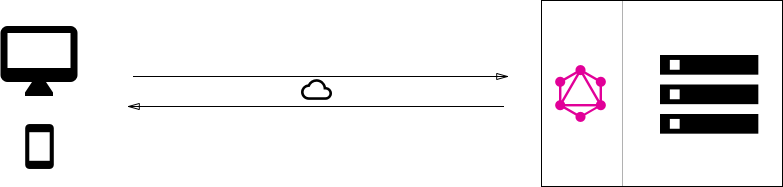
Interface to a DB
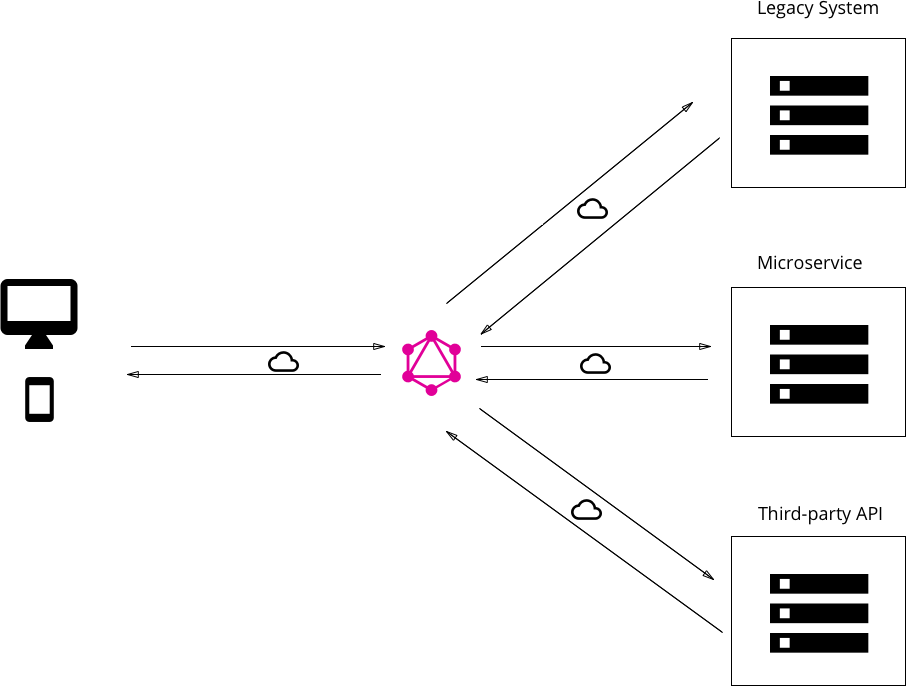
Interface to services
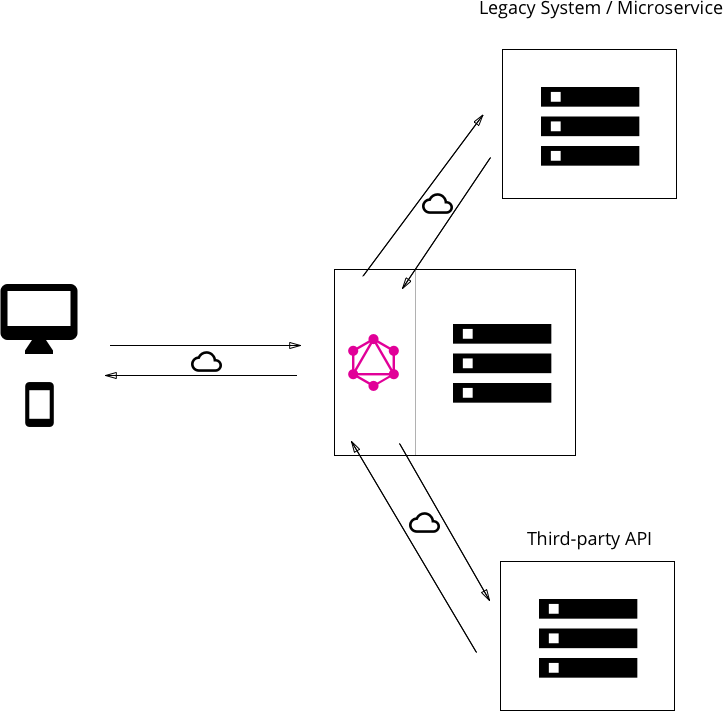
Interface to hybrid
Let's talk about REST
Before we begin
- GraphQL is not always a replacement to REST
- There are use cases where REST is fine
A simple scenario
- Let's say we have 3 resources
- Books
- Authors
- Categories
Strict resource structure
- ex:
/books/authors/42/categories
- Maintain simplicity, resources are straightforward
- Consumer(s) is now responsible for potential business logic
- Consumer(s) may need to make multiple calls and round trips
- Risk of fetching unused data
Adding variations to query
- ex:
/categories/12/books/categories/fantasy/authors/books?category=fantasy&author=42
- Consumer(s) is still for responsible for advanced business logic
- Consumer(s) may need to make multiple calls and round trips
- Risk of fetching unused data
- Queries? Subresources? Both? What's the true approach?
- If not using queries, how much nesting and order?
Custom endpoints
- ex:
/books/suggestions?where=Where's%20Wa/books/newReleasesOnSaleForYoungAdults/books/iPhoneData/books?app=storeapp
- Business logic can be abstracted out of consumer(s)
- Number of calls and round trips can be reduced drastically
- More endpoints or complicated endpoints
- Potential abuse complicates architecture and maintainability
REST can get too abstract
- Additional rules (should) be established
- Consistency in design, documentation, maintenance, etc.
- Risk of inflexibility
- Contract between server and client?
- What about live updates and feeds?
GraphQL: Why?
Why GraphQL
- Queries are data driven and flexible
- Agnostic to data sources
- Strong type system and schema defines contract
- Great with an iterative and evolving process
- Subscriptions
Why not GraphQL
- Resources are small and simple
- Flexibility is not required or leveraged
- Data not easily represented as a graph
- Single and/or simple clients
- TL;DR: Overkill
GraphQL: How?
Hands on
- https://github.com/jupl/tech-night-graphql
- Presentation available
- Examples available in different branches